Three Funerals, One Graduation, and the Same Green Bean Casserole: In Praise of the Family Go-Dish
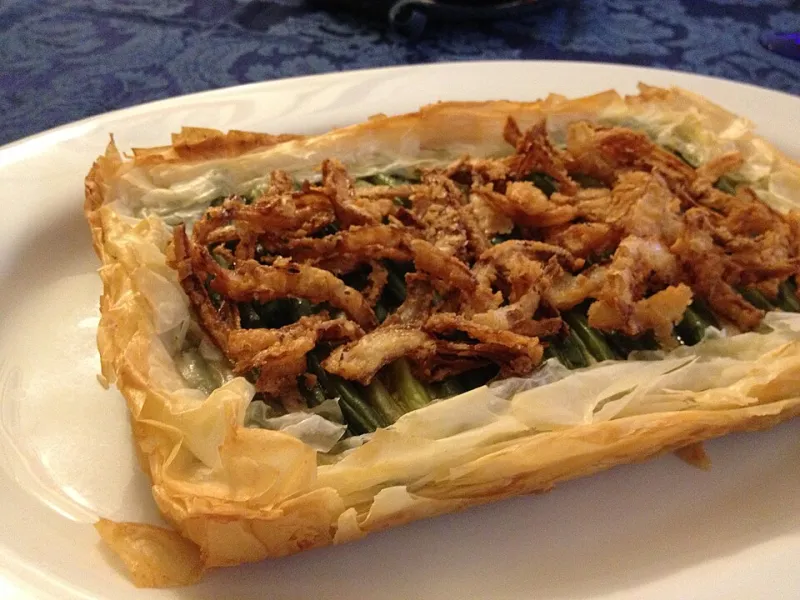
Photo: Stephanie Clifford from Arlington, VA, USA, CC BY 2.0, via Wikimedia Commons
In my family, there is one dish that has attended more life events than most of our relatives. It's a green bean casserole — not the fancy kind with fresh haricots and shallot confit, but the 1955 canonical version, condensed soup and all — and it has been present at three funerals, one high school graduation open house, a baptism, and at least a dozen Thanksgivings. My aunt Carol makes it. Carol has always made it. When Carol once showed up to a cousin's wedding shower holding a different side dish, the whispers were immediate and unkind. Where's the casserole? Is she okay?
That's the thing about a go-dish. It stops being food. It becomes a flag.
The Dish as Family Passport
Every clan seems to have one. The seven-layer dip that appears at every Super Bowl party since the Reagan administration. The deviled eggs with the secret paprika situation that your uncle guards like nuclear codes. The banana pudding in the same chipped glass dish that has survived four moves and a dishwasher incident. These dishes travel — to hospital waiting rooms, to potlucks, to the neighbor who just had a baby — and with every trip they accumulate a kind of frequent flyer status.
Sociologists might call this "foodways," but in practice it's simpler than that: when you can't fix the sad thing that happened, you can at least show up with the right casserole. The dish says we know who we are, and we know what you need. It's a message written in cream of mushroom soup.
And yes, sometimes it's slightly embarrassing. Mine's a Jell-O situation on my dad's side — lime, cottage cheese, crushed pineapple, a combination that has horrified every in-law who married in. We don't apologize for it. We just make sure there's a spoon.
How the Go-Dish Gets Chosen
Nobody votes on this. The signature dish usually wins by attrition — one person makes it once, it gets requested twice, and by the third gathering it's simply assumed. But if your family hasn't crowned a champion yet, here's how to think about it:
- It must travel well. A go-dish spends more time in a car than on your table. Soufflés need not apply.
- It should be recognizable at fifty feet. People should be able to spot it across a fellowship hall and adjust their plate strategy accordingly.
- It needs a story, even a small one. "Grandma started making this in 1974 because the church potluck ran out of mains" beats "I found it on a blog."
- Somebody has to defend it. A signature dish needs a guardian — the person who makes it, teaches it, and gently shuts down anyone suggesting "a little update."
Claiming Yours Before Someone Else Does
Here's my practical advice: pick your lane early. The families with clear dish assignments run like a well-oiled volunteer fire department. You bring the rolls, your sister brings the pie, nobody duplicates, nobody shows up with a sad bagged salad and a guilty face.
If you're starting from scratch, make one thing, make it well, and make it the same way for five years. That's it. That's the whole trick. Consistency is the secret ingredient nobody puts on the recipe card. By year six, you won't be allowed to bring anything else — and honestly, that's the nicest kind of trap a family can set for you.
My aunt Carol is in her seventies now, and the casserole recipe lives in exactly one place: her head. Last Thanksgiving I finally stood next to her with a notepad while she cooked by feel, saying "you'll know when it looks right" about eleven times. I wrote it all down. Someday that dish will go to a fourth funeral and a second graduation without her, and it'll still taste like showing up.
That's the whole point. The dish is how a family says you're ours — in Pyrex, with a rubber-banded lid, ready to travel.