Fusion Before It Had a Name: The Immigrant Dishes That Rewrote the American Weeknight
Every culture has a dish that makes purists wince and grandkids beg for seconds. In America, we've got a whole cookbook of them — meals born not in test kitchens but in cramped apartments, when a cook stood in front of a strange supermarket shelf and made it work anyway.
These dishes are often dismissed as knockoffs. They're better understood as correspondence: letters home written in the language of canned tuna and ketchup. Here are five of my favorites, with dinner-ready versions you can make on a weeknight.
Filipino Spaghetti With Hot Dogs
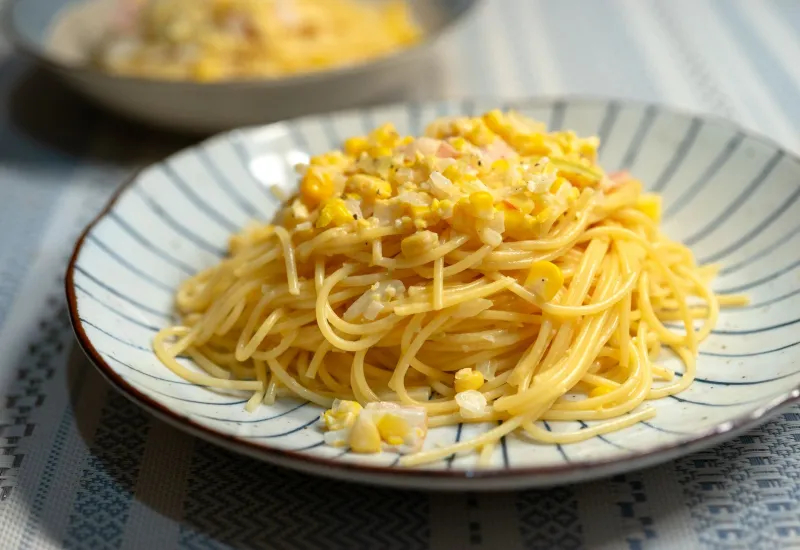
Italian nonnas, look away. Filipino spaghetti is sweet — the sauce built on banana ketchup or sugar-touched tomato sauce, often studded with sliced hot dogs instead of meatballs. It traces back to the American colonial period in the Philippines (1898–1946), when canned goods like processed meat and ketchup arrived and Filipino cooks folded them into local palates that love sweet-savory combos. When families immigrated to the US, the dish came along, and now it's a fixture of Filipino-American birthdays everywhere.
Weeknight version: Sauté a sliced onion and four chopped hot dogs in a little oil. Add one 15-oz can tomato sauce, 2 tablespoons banana ketchup (or regular ketchup plus a teaspoon of sugar), and a splash of fish sauce. Simmer 15 minutes, toss with spaghetti, and bury it in shredded cheddar. Yes, cheddar. Trust the process.
The Korean-American Tuna Melt
Korean comfort food already had a love affair with American canned goods — Spam and hot dogs arrived during the postwar decades and never left. In Korean-American kitchens, the humble tuna melt got a glow-up: tuna mixed with kewpie mayo and a drizzle of sriracha or gochujang, piled on buttered bread, topped with a slice of cheese, and griddled until the edges crisp. Some versions add a sprinkle of sugar to the tuna salad, a classic Korean diner move.
Weeknight version: Mix two cans of drained tuna with 3 tablespoons mayo, a teaspoon of gochujang, and sliced scallions. Pile on sourdough with sharp cheddar, butter the outsides, and grill low and slow until the cheese gives up completely.
Tex-Mex Pot Roast
Pot roast is New England stock, but somewhere along the border it met chili powder, cumin, and a can of Rotel, and came out a different animal entirely. Mexican and Texan home cooks — many working with cheaper cuts and a pressure cooker — transformed the Sunday roast into something smoky, spicy, and fork-shredded, served over rice or folded into tortillas. It's the backbone of countless family taco nights across the Southwest.
Weeknight version: Season a 3-lb chuck roast with chili powder, cumin, garlic powder, and salt. Sear hard on all sides, then nestle it in a Dutch oven with one can of Rotel, one sliced onion, and a cup of beef broth. Cover and braise at 300°F for about 3 hours (or 60 minutes in a pressure cooker). Shred, skim the fat, and serve with warm tortillas and pickled jalapeños.
Japanese-American Curry Rice
Japanese curry — thick, mild, slightly sweet, from a brick of roux — came to America with immigrant families and found a new life on the West Coast. The weeknight version leans on shortcuts: S&B curry roux blocks, whatever vegetables are wilting in the crisper, and a pot big enough for leftovers, because it's better the second day anyway.
Weeknight version: Brown cubed chicken thighs with a sliced onion, carrot coins, and a diced potato. Add 3 cups water, simmer 20 minutes, then melt in two blocks of curry roux. Serve over short-grain rice. Total active time: about 10 minutes of actual effort.
Chinese-American Egg Roll Bowls
Take the filling of a classic egg roll — cabbage, pork, ginger, garlic — and skip the folding, rolling, and frying. This deconstructed weeknight version circulates in Chinese-American home kitchens and, more recently, all over TikTok, where it's been rebranded as a "crack slaw." The origins are older than the hashtag: it's the food of cooks who wanted the flavor without the labor after a twelve-hour day.
Weeknight version: Brown a pound of ground pork with a tablespoon each of grated ginger and minced garlic. Add a bag of coleslaw mix, 2 tablespoons soy sauce, 1 tablespoon rice vinegar, and a teaspoon of sesame oil. Cook until the cabbage slumps. Top with fried shallots if you're feeling fancy.
The Shared Table
What ties these dishes together isn't fusion for fusion's sake. It's adaptation — the quiet, daily creativity of people cooking in a new country with a new pantry. Every one of these meals started with a substitution, a workaround, a "what if I used this instead?"
That's not a lesser form of cooking. Arguably, it's the most American cooking there is. So the next time someone sniffs at hot dogs in spaghetti, hand them a fork. The story tastes better than the rules.