Put Down the Colander: 9 Kitchen Commandments You're Allowed to Break
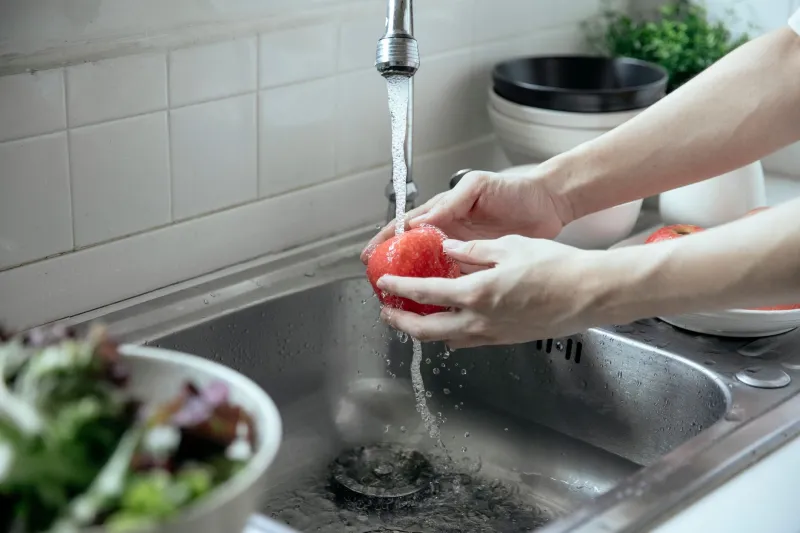
Somewhere along the way, a set of kitchen rules got passed down like family heirlooms: never wash mushrooms, always rest your meat, for the love of all that is holy, rinse your chicken. Some of these have real logic behind them. Most don't. And a few are actively making your food worse.
I talked with home cooks who've been at this for decades and combed through the guidance from food safety experts at USDA extension programs, and the pattern is clear: half the commandments we follow exist because they once solved a problem we no longer have. Here's what you can finally let go of.
1. Rinsing Raw Chicken
The myth: rinsing washes away bacteria. The reality: it sprays it. USDA research has shown that rinsing poultry can aerosolize bacteria like campylobacter up to three feet around your sink — onto your counters, your dish rack, your coffee mug. The heat of cooking is what kills pathogens, not your faucet. Pat the bird dry with a paper towel (dry skin also crisps better) and skip the shower.
2. Never Washing Mushrooms
This one comes from the idea that mushrooms absorb water like sponges. They do absorb some — but a quick rinse followed by a towel pat adds negligible moisture, and it beats eating grit. Unless you're someone who brushes each button cap individually with a pastry brush at 6 a.m., rinse them. A 15-second shower won't ruin your sauté; dirt will.
3. Salting Pasta Water 'To Taste'
You can't taste unsalted pasta water and know if it's right — there's no dish to evaluate. The working rule from restaurant kitchens: it should taste noticeably salty, like seasoned soup. Under-salting is the number one reason home pasta tastes flat no matter what sauce you pour on it.
4. Saving Pasta Water on Autopilot
Saving starchy pasta water is genuinely useful — it helps emulsify sauce. But people drain it into a measuring cup out of pure ritual and then dump it down the sink anyway. Only save it if you're finishing the pasta in the pan with sauce. If you're pouring jarred marinara over drained noodles, that mug of cloudy water is decoration.
5. Searing 'Seals in the Juices'
A hard sear creates the Maillard reaction — browning that builds deep, savory flavor. It does not seal anything. A seared steak actually loses slightly more moisture than an unseared one. Sear for flavor, not for waterproofing, and rest the meat afterward if you want the juices to redistribute.
6. You Must Rest Meat for Exactly X Minutes
The five-minutes-per-inch formulas get treated like physics. Resting helps, but the stakes are lower than cooking media implies. A thin pork chop needs barely two minutes; a big roast benefits from twenty. Rough rule: rest it about as long as it took to cook, capped at a reasonable number, loosely tented with foil. It's a guideline, not a liturgy.
7. Boiling Destroys All Nutrients
Yes, some water-soluble vitamins leach into boiling water. But if you're drinking the liquid — soup, stock, braising liquid — you're eating those nutrients back. The real nutrient killers are long exposure to high heat and light, not a pot of water. Steaming and roasting remain great, but boiled carrots are not a scam.
8. The Five-Second Rule
Food scientists have actually studied this, and the answer is: moisture and time matter more than seconds. A wet slice of watermelon picks up bacteria essentially on contact; a dry cracker on a clean-ish counter is a different story. The rule isn't a safety protocol — it's a personal risk assessment wearing a funny hat. Nobody at the USDA is adjudicating your dropped fry.
9. Never Use a Dull Knife — Just Buy Expensive Ones
The first half is true; the second half is marketing. A sharp $15 knife is safer and better than a dull $200 one, because the danger comes from force, not price. What actually matters is a $10 sharpener and using it every few weeks. Most 'I'm bad at chopping' is really 'I'm chopping with a butter knife.'
The Common Thread
Notice the pattern: almost every myth survives because it contains a grain of truth stretched past usefulness. Searing does add flavor. Resting does help. Pasta water is useful — when you need it. The goal isn't to throw out kitchen wisdom; it's to understand why behind each rule so you can decide when it applies.
Your grandmother rinsed chicken because her grandmother did, back when poultry processing was a genuinely different beast. You have a refrigerator thermometer, a modern food supply, and permission to think for yourself. Use all three.