Number 7, Extra Duck Sauce: Remembering the Takeout Joint That Raised Me
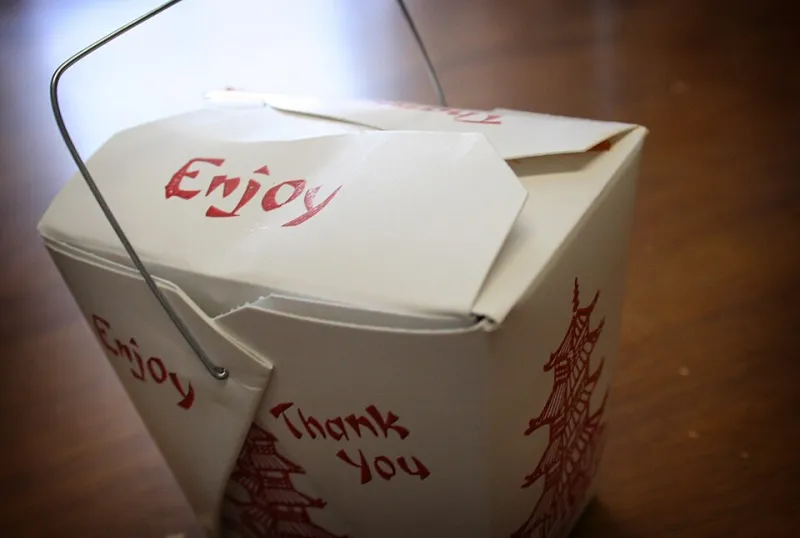
Photo: Ginny from USA, CC BY-SA 2.0, via Wikimedia Commons
There's a menu taped inside my parents' kitchen drawer that's older than I am. Laminated, corners curled, the phone number still has an area code that changed in 1996. At the top, in that unmistakable font every Chinese-American takeout place seems to share — the one that looks like it was chosen from exactly three options in 1982 — it says HAPPY GARDEN KITCHEN, even though the owners' name was Chen and there was never a garden.
That restaurant closed in 2019. The strip mall it occupied now has a phone repair shop and a vape store. And every time I drive past, I feel like I lost a relative I never thanked properly.
The Fluorescent Waiting Room of My Childhood
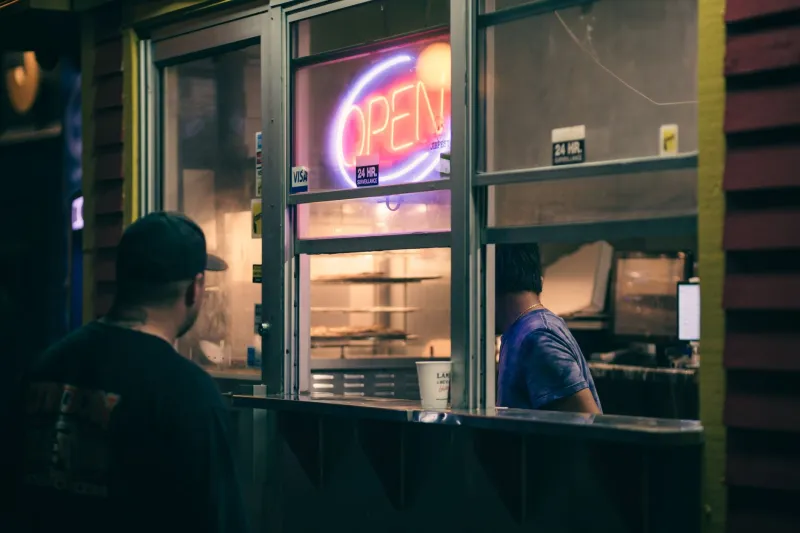
If you grew up anywhere in America with more than 5,000 people in it, you know this place. The fluorescent hum. The counter with the plexiglass sneeze guard. The corkboard wheel — or if you were fancy, an actual spinning metal wheel — where your paper ticket hung while you waited. The wall calendar from the local Chinese restaurant association, featuring misty mountains and a proverb about patience.
The menu was a miracle of standardization. Chow mein, chop suey, egg foo young, General Tso's, sweet and sour pork, crab rangoon. Dishes that exist almost nowhere in China but everywhere in Ohio. This wasn't a failure of authenticity — it was a brilliant adaptation, built by immigrants who asked what their new neighbors wanted to eat and then made it, night after night, six days a week, for decades.
Crab rangoon contains no crab and comes from no rangoon. It's cream cheese and imitation crab in a wonton wrapper, and it is perfect, and I will not hear otherwise.
Where Did They All Go?
Here's the part that stings: Chinese restaurants have been the most common form of Chinese immigrant business in America for over a century. At their peak, there were more Chinese restaurants in the US than McDonald's, Burger Kings, and Wendy's combined.
That number is shrinking. Not because people stopped loving the food — the food is fine, the food is beloved — but because the economics have turned brutal. I talked to a second-generation owner outside Cleveland (she asked me not to use her name, but her family's place has been open since 1974) and she laid it out plainly:
- Delivery apps take 15 to 30 percent of every order, on businesses that already run on margins thinner than a wonton wrapper
- Nobody wants to take over. Her kids became a nurse and a software engineer, and she describes that as her proudest achievement and her family's saddest statistic at the same time
- Rents went up while menu prices couldn't. Try raising the price of the lunch special past $8.95 in a town that remembers when it was $4.50
- The hours are inhuman. Sixteen-hour days, closed maybe one day a week, holidays spent feeding everyone else's holidays
The parents' generation accepted that trade as the price of a foothold in America. The kids' generation, raised behind the counter doing homework next to the deep fryer, mostly decided the price was too high.
What We Actually Lose
Here's what doesn't show up in the statistics. That takeout joint was often the only sit-down-or-call-in restaurant in neighborhoods that banks and chains redlined and overlooked. It was a de facto community center: the Little League team's fundraiser orders, the Christmas Eve dinner for the family that didn't cook, the standing Friday order the owner started making before you even called.
When a Chinese takeout place closes, the neighborhood doesn't just lose food. It loses a business that knew your name, your order, and your kid's allergy — and asked about all three.
There's also the quieter loss: these places are living museums. The hand-lettered specials board. The fish tank that may or may not be decorative. The fortune cookies in the big tin by the register. You can't relocate that to a museum. It only exists while someone's still running the fryer.
Order the Rangoon. Tip Like You Mean It.
So here's my small ask, and I mean it sincerely: find your local joint. The one with the laminated menu and the wheel. Order directly — call them, pick it up, skip the app's cut. Get the crab rangoon even if it's a cliché, especially because it's a cliché. Ask the person at the counter how long they've been there. You'll usually get a story worth the wait.
And if you're the kid of a takeout owner reading this: I get it. Nobody should feel obligated to inherit a 16-hour workday. But call your mom. Tell her the sesame chicken was the best thing in town.
She already knows. But it's nice to hear.
Happy Garden Kitchen, wherever you ended up — thanks for every Friday night. Sorry I never said it while the light was still on.