Bottomless Coffee, Boundless Secrets: Inside the Diner's Unwritten Rule of Anonymity
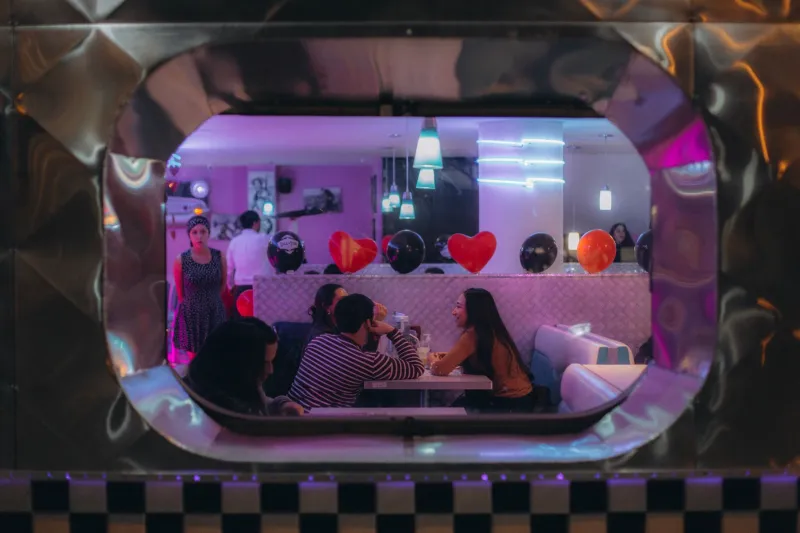
The man in booth six has been coming to the Starlite Diner in Dayton, Ohio, every Tuesday for eleven years. The servers know his order — two eggs over hard, rye toast, coffee he never lets them refill past the halfway line. What they also know, and what his own brother doesn't, is that he's been writing letters to a woman in Portugal for a decade and has never once mentioned it out loud anywhere but that booth.
Nobody at the Starlite finds this strange. That's the point.
The Booth as Confessional
There's a particular kind of honesty that shows up at diner tables, and anyone who has worked a graveyard shift can spot it walking through the door. It's not the looseness of alcohol. It's something quieter — the relief of being in a place where you are known only by your order.
Psychologists have a term for part of it: the "stranger on a train" effect. We disclose more to people we're reasonably sure we'll never see in our daily lives, because the stakes are low and the judgment, real or imagined, is temporary. A diner compresses that effect into a 7 a.m. coffee shift. You can tell your waitress you're thinking about leaving your husband, finish your hash browns, pay eleven dollars, and walk back into your regular life with the secret safely deposited somewhere that doesn't have your phone number.
"I've heard engagements, affairs, bankruptcies, and one guy who confessed he'd never told anyone he couldn't read," says Marlene, who has waited tables at a truck stop outside Bakersfield for twenty-six years. "You learn real fast that you're not a waitress in those moments. You're a witness."
Why Servers, Specifically?
It's tempting to credit the coffee, but the dynamic is more deliberate than that. A good server practices what researchers call "compassionate detachment" — present enough to feel safe, removed enough to feel consequence-free. They refill your cup without interrupting the sentence you were working up to. They don't flinch.
There's also the rhythm of the place. Diners are one of the few restaurants where sitting alone is not just accepted but normal, where the counter stool comes with a view of the whole room and no pressure to perform. Nobody's table-hopping. Nobody's taking photos. The lighting is honest, the booths are deep, and the coffee keeps coming whether you cry into it or not.
Longtime owners say the pattern holds across state lines. A retired owner in Scranton told me his regulars divided cleanly into two groups: the ones who came for the food and the ones who came to say something out loud for the first time. "The food group tips better," he admitted. "The other group, you worry about them."
The Rules Nobody Wrote Down
Ask servers about it and you'll hear an unspoken etiquette emerge, passed along shift to shift like a family recipe:
- You don't bring up last week's confession unless they do.
- You never tell another regular. Ever.
- If someone sits at the counter instead of a booth, that's small talk. If they slide into a corner booth alone, that's a conversation.
- You keep the coffee coming during the hard parts.
These rules exist because the arrangement only works if it's safe. The anonymity is mutual — the server knows your secrets, you know their shift schedule, and both of you understand that the parking lot is where the exchange ends. It's intimacy with an exit ramp, and for a lot of people, that's the only kind they can afford.
A Vanishing Kind of Room
Here's the part worth worrying about: these rooms are disappearing. Independent diners have been closing at a steady clip for years, squeezed by rents, chain breakfast spots, and the slow migration of morning routines onto phones. And nothing in a drive-thru lane invites you to unburden yourself. Nothing about scrolling your order into a kiosk creates a witness.
What gets lost isn't just the pancakes. It's one of the last public spaces in American life where a stranger will listen to you without an app, an algorithm, or an audience involved. Churches have pews and bars have stools, but the diner booth asks nothing of you except that you order something warm.
The man in booth six in Dayton eventually did marry the woman from Portugal. The whole Starlite staff was invited to the wedding. He cried during his toast, and Marlene says half the servers cried too, because of course they did — they'd been hearing about her for ten years, one Tuesday at a time.
That's the quiet magic of the place. You think you're just telling your story to nobody in particular. Turns out a whole room has been holding it for you, cup by cup, until you're ready to carry it yourself.