Marker on Masonite: The Quiet Art of the Handwritten Specials Board
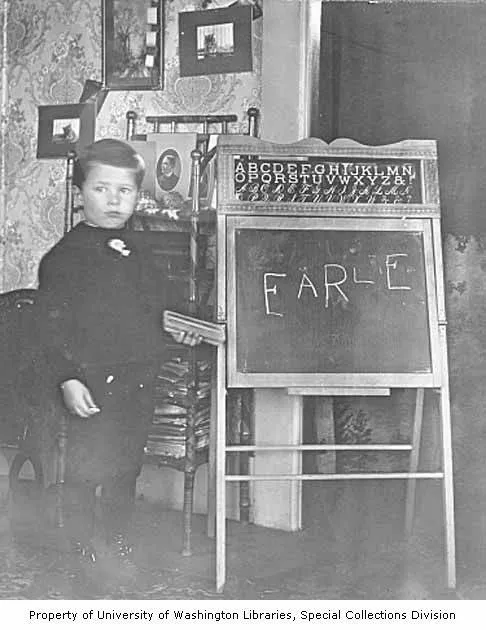
Photo: Unknown authorUnknown author, Public domain, via Wikimedia Commons
There's a moment at every good small-town diner that happens before you even sit down. Your eyes drift past the laminated menu, past the pie case, and land on the board — the whiteboard, the chalkboard, the piece of poster board taped to the pass-through window — where today's special lives in somebody's actual handwriting.
Meatloaf plate $9.95. Comes w/ mashed. Ask about the peach cobbler — it goes fast.
No app can tell you that. No digital display would dare put a warning like "it goes fast" on a screen. And that's exactly the point.
What the Board Says Without Saying It
I started paying attention to these boards a few years back, and once you notice them, you can't stop. The specials board is the most honest document in the American restaurant. It's written in real time, by a real person, based on what showed up on the delivery truck that morning.
If the salmon special appears, somebody drove to the fish market. If Tuesday's special is pot roast for the fourth week running, that's not laziness — that's what the regulars demand. If the handwriting is rushed and the price has a smudge where someone changed it, business is either booming or struggling, and you can usually tell which.
Darlene Houk, who has run the Wagon Wheel Diner outside Lincoln, Nebraska for thirty-one years, puts it plainly: "The board is me talking. The menu is just paper. When I write 'chicken fried steak — Gene's favorite' up there, half the town knows who Gene is, and the other half wants to."
That's the secret the board keeps: it's not advertising. It's gossip. And gossip, unlike software, doesn't need an update.
The Ritual of the Morning Write
Ask diner owners about their specials routine and you'll hear something close to liturgy. The board gets written before the coffee finishes brewing. It's the first task of the day, and the words chosen at 6 a.m. set the tone for the whole room.
At the Bluebird Cafe in Wabash, Indiana, owner Ray Delgado writes his specials in pencil first, on a legal pad, then commits them to the chalkboard. "You don't get do-overs on a chalkboard," he told me. "You write it sloppy, the whole day feels sloppy." His board always includes one line that isn't food — a birthday, a weather forecast, a joke. "People come in and read the board like a newspaper. I'd feel weird if it was just prices."
There's urgency built into the format, too. A printed menu implies permanence. A marker board implies now. Regulars know that when the special sells out, someone walks over and wipes it off — no announcement, no apology email. If you wanted the hot turkey sandwich, you should've come at noon, not 1:30. In an era where everything is available forever, there's something almost thrilling about a meal that exists for exactly four hours.
Why They Refuse to Automate
You might assume the handwritten board is just inertia — that these places would go digital if someone showed them the right tablet. You'd be wrong. Most of the owners I spoke with have considered it, and all of them rejected it for reasons that had nothing to do with nostalgia.
Cost is part of it. A TV screen and a subscription service cost money every month; a $4 pack of markers lasts a season. But the deeper reason is human. When a special changes mid-shift — say, the cook runs short on the pork chops — someone has to physically walk to the board and fix it. That person is usually the owner. And in the thirty seconds it takes to cross out "pork chops" and write "ham steak," they talk to three customers.
"That board is my excuse to circulate," Darlene told me. "I go up there to erase the fish, and I end up hearing about Marge's hip surgery and finding out the Hendersons are expecting. You think a screen's gonna do that?"
A Small Language All Its Own
Handwritten specials boards have developed a dialect, and if you eat enough diner breakfasts, you start to read it fluently. The asterisk means the good stuff. The "HK" that stands for home fries. The crossed-out price where the owner decided, mid-marker, to charge less. The all-caps word — HOMEMADE — that functions less as information and more as a promise.
And the mistakes. Oh, the mistakes. The misspelled "brocoli," the special written for yesterday still lingering at 10 a.m., the item added so far to the edge of the board it's practically on the wall. Every one of those errors is proof that a person, not a system, made this menu. In 2024, that's practically a seal of authenticity.
The Board as Community Bulletin
Here's the thing that surprised me most in reporting this piece: the specials board has quietly become something else entirely. It's a classified section. A lost-dog network. A place where "PIANO FOR SALE" shares space with "Hot Beef Manhattan." Diners are often the last third places in a town, and the board is their public square in miniature.
Ray at the Bluebird says he's posted everything from fundraiser flyers to a note asking for help finding a lost cat named Biscuit. "We found Biscuit," he notes, with some pride. "The board works."
So the next time you walk into a small-town diner and see that smudged, slanted, occasionally misspelled board, take a second before you order. Read the whole thing, including the little asides. You're not just looking at today's meatloaf. You're reading a one-page diary of a kitchen, a town, and a person who woke up early and picked up a marker.
Some traditions refuse to be automated. Thank goodness this one does.