Labeled in Sharpie, Saved for Later: In Defense of the Overstuffed Freezer
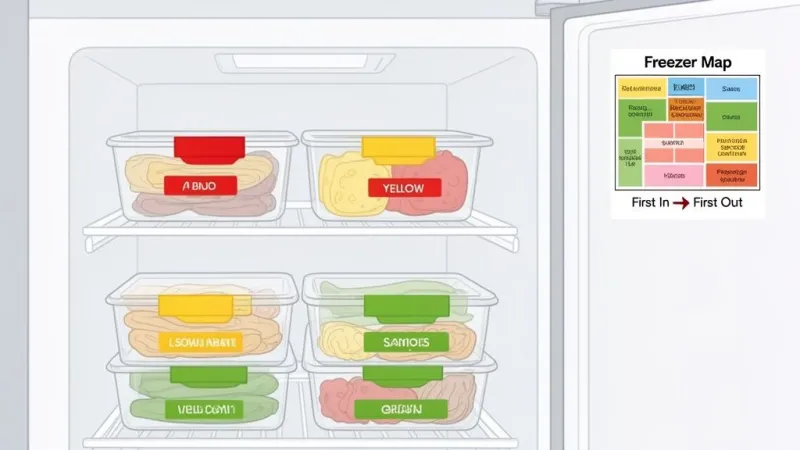
Photo: overfilled home freezer with foil containers and labeled leftovers, via cdn.outrank.so
Open my mother's chest freezer and you'll find the usual suspects: a bag of frozen peas, some chicken thighs, ice crystals on everything. But dig past the first layer and the archaeology begins. A foil pan with two inches of beef stew, labeled in Sharpie from sometime around the pandemic. A single ramekin of homemade chicken stock she swore she'd use for soup in October. It is now, by her own admission, 'probably still fine.'
If you're American — or the grandchild of anyone who lived through hard times — you have this freezer too. Maybe it's a chest model in the garage, maybe it's the one above the fridge with a door that barely shuts. Either way, it's full. And nobody wants to talk about why.
The Tupperware Won't Throw Itself Away
Let's start with the containers, because the freezer is only half the crime scene. Open any American cabinet over the sink and you'll meet the plastic avalanche: mismatched lids, deli cups from 2019, a Cool Whip tub that now holds buttons or screws or — in every grandmother's kitchen I've ever visited — more Cool Whip tubs.
We save them because throwing them away feels like a small sin. A container cost nothing and might be useful, and 'might be useful' is the most powerful phrase in the American domestic vocabulary. It has single-handedly stocked more junk drawers than any hardware store.
Thrift Is a Family Heirloom
Here's the thing: nobody in my family grew up rich, and the freezer habits show it. My grandmother, who came here with two suitcases and a rice cooker, could stretch a pot of soup across four meals and considered wasting rice a moral failing. Depression-era kitchens worked the same way from the other direction — you saved the fat, saved the drippings, saved the jar because jars cost money.
That instinct doesn't dissolve just because the times got easier. It gets passed down like a casserole dish. So when my mother wraps half a meatloaf in three layers of foil 'just in case,' she's not being irrational. She's speaking a language she learned at someone else's table.
The Mystery Items, Ranked
Every overstuffed freezer has its own taxonomy. A field guide:
- The Orphaned Casserole. Brought to a potluck, never claimed, now a permanent resident. Nobody knows whose recipe it was. Nobody dares ask.
- The Single Banana. Frozen solid, peel browned, destined for banana bread that will never be baked. It is not a banana anymore. It is an intention.
- The Holiday Ice Cream. A tub of peppermint stick from December, opened once, now fused to the shelf. It has become structural.
- The Bag of 'Soup Bones.' Purchased with great ambition at the farmers market. Still waiting for the great stock-making weekend of the soul.
We keep these things not because we'll eat them, but because throwing them away means admitting the weekend never came. And that's a little too much honesty for a Tuesday.
Clutter With a Lid On It
Here's my argument, and I'll die on this frozen hill: the overstuffed freezer is not laziness. It's love that got stored instead of used.
That half-pan of lasagna is a neighbor who didn't want your family to cook one night. The saved containers are a grandmother who never let a good thing go to waste. Every mystery item is proof that someone, at some point, cooked too much on purpose — because in most kitchens I know, making extra is how you say 'I expected you to come back.'
A Truce, Not a Purge
I'm not telling you to keep everything forever. The USDA would like a word about that two-year-old chili. But I am asking you to soften the guilt. Once a season, pull everything out, toss what's genuinely gone, and eat one mystery meal in honor of the ancestors who never wasted a thing.
Then label the rest in Sharpie with a real date — future you deserves that much. And when the freezer door fights you on the way shut, don't curse it. Lean your hip into it, like everyone else in this country, and let the lid do what lids do best: hold things together a little longer than seems reasonable.