Wiping Down Tables at Seven Years Old: What the Restaurant Gave Me (and What It Took)
There's a photograph somewhere in my parents' basement of me, maybe eight years old, standing on a milk crate behind the hostess stand of Happy Garden. I'm wearing a shirt that says BOSS. My dad took it as a joke. Neither of us knew at the time how long that joke would take to land.
The Restaurant Was the First Place I Remember
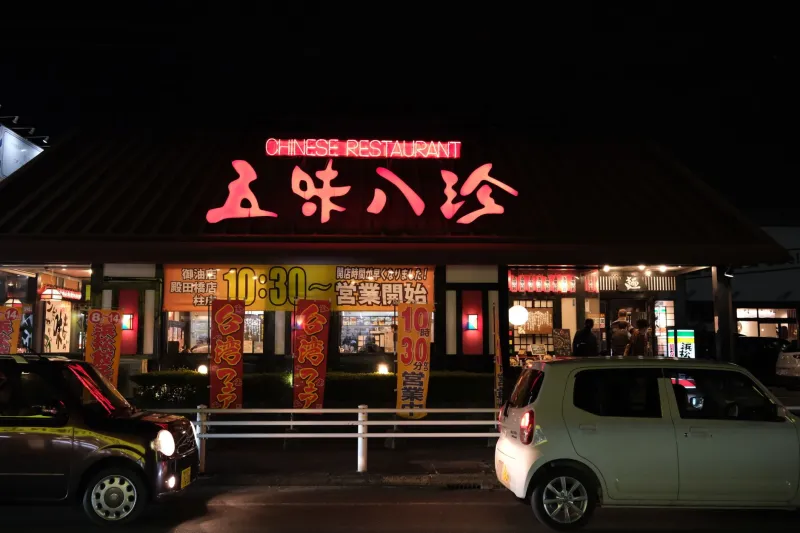
Not a house. Not a bedroom. The restaurant. Happy Garden sat in a strip mall between a nail salon and a vacuum repair shop in Dayton, Ohio, and it was the entire geography of my childhood. I learned multiplication by doubling wonton orders. I learned to read off the to-go tickets. I learned that if I sat very still in booth four with my math workbook, the lunch rush would pass over me like weather.
My parents opened the place in 1989 with a loan from my great-uncle and a set of recipes my mother adjusted on the fly because American customers kept asking for things to be sweeter. She'd stand at the stove muttering about it, then add the sugar. The customer, as they say, was always right. My mother just said it in Cantonese under her breath.
The Staff Meal Is a Sacred Institution
If you've never eaten the after-close meal at a family restaurant, I don't fully trust your understanding of food.
At 10:30 at night, after the last to-go order and the mopping, the real cooking started. This was when my mother made what she actually wanted to eat: bitter melon with pork ribs, steamed egg custard slicked with scallion oil, a whole fish that had never appeared on the laminated menu. The kitchen turned inside out. The American restaurant, with its General Tso's and its egg rolls, went to sleep, and the Cantonese one underneath it woke up.
We ate standing up, sitting on milk crates, leaning against the reach-in freezer. My dad would tell the same story about the village he left. The dishwashers — guys who'd been with us since before I was born — would argue about basketball. Nobody checked their phone because, in those years, there was nothing to check.
I have eaten at restaurants with three Michelin stars since then. I have never once been served something better than my mother's steamed fish eaten off a prep tray at midnight.
The Regulars Who Became Family
Every family restaurant has them: the regulars who blur the line between customer and kin.
There was Mr. Kowalski, who came in every Friday for thirty years and ordered the same thing so reliably that my father started his plate before he sat down. There was the couple who had their first date in booth two and their anniversary dinners there for a decade after. When my grandmother died, half the dining room sent flowers. When Mr. Kowalski's wife passed, my mother closed the kitchen for an afternoon and brought food to his house — the same dishes he always ordered, made the way she made them for family, which is to say, correctly.
That's the part outsiders miss about places like Happy Garden. They think of the neighborhood Chinese joint as a transaction: you hand over twelve dollars, you get lo mein. But the restaurant was a mutual aid society, a bulletin board, a place where the lonely came to be recognized. My parents were never going to be rich, but they were rich in the only currency that strip mall dealt: being known.
The Backup Plan I Never Asked to Be
Here's where the story turns, because every restaurant kid knows this part.
Somewhere around middle school, I understood that I was the plan. Not the plan A — my parents were too loving to say it out loud — but the plan B, C, and D. If everything else fell through, there was the restaurant, waiting, patient as a cast-iron pan. My name would go on the lease someday. My hands would learn the wok. The logic was airtight and it made me feel like a savings account.
I went to college two states away and studied something deliberately useless. I called home less than I should have. When my dad got sick the year I turned twenty-six, I came back for three months and ran the front of the house, and I was good at it, and that scared me more than anything, because being good at it felt like an argument I was losing to myself.
What I Chose, and What I Keep
Happy Garden closed in 2015. The strip mall got redeveloped; there's a chain coffee place there now. My parents, finally, are resting. My dad gardens. My mother judges every restaurant we go to, mercilessly, and I love her for it.
I didn't take over the restaurant. I write about food instead, which is either a betrayal or a continuation depending on the day and my mood. But here's what I know: I still cook staff meal for my friends on Sunday nights — standing up, eating off mismatched plates, telling stories too loud. I still can't walk past a strip mall Chinese restaurant without slowing down. I still feel the pull of booth four.
The restaurant didn't survive. But the restaurant, it turns out, was never really the point. The point was the table behind it — the one nobody paid for — and the people who kept it set for whoever wandered in after close.
I guess that's the torch. It just turned out to be smaller, and heavier, and more portable than a lease.